How it works

A system, not a feature list.

Seven moves, one loop. Each one feeds the next — that’s why an ASCND session is never a guess.

1

Diagnose

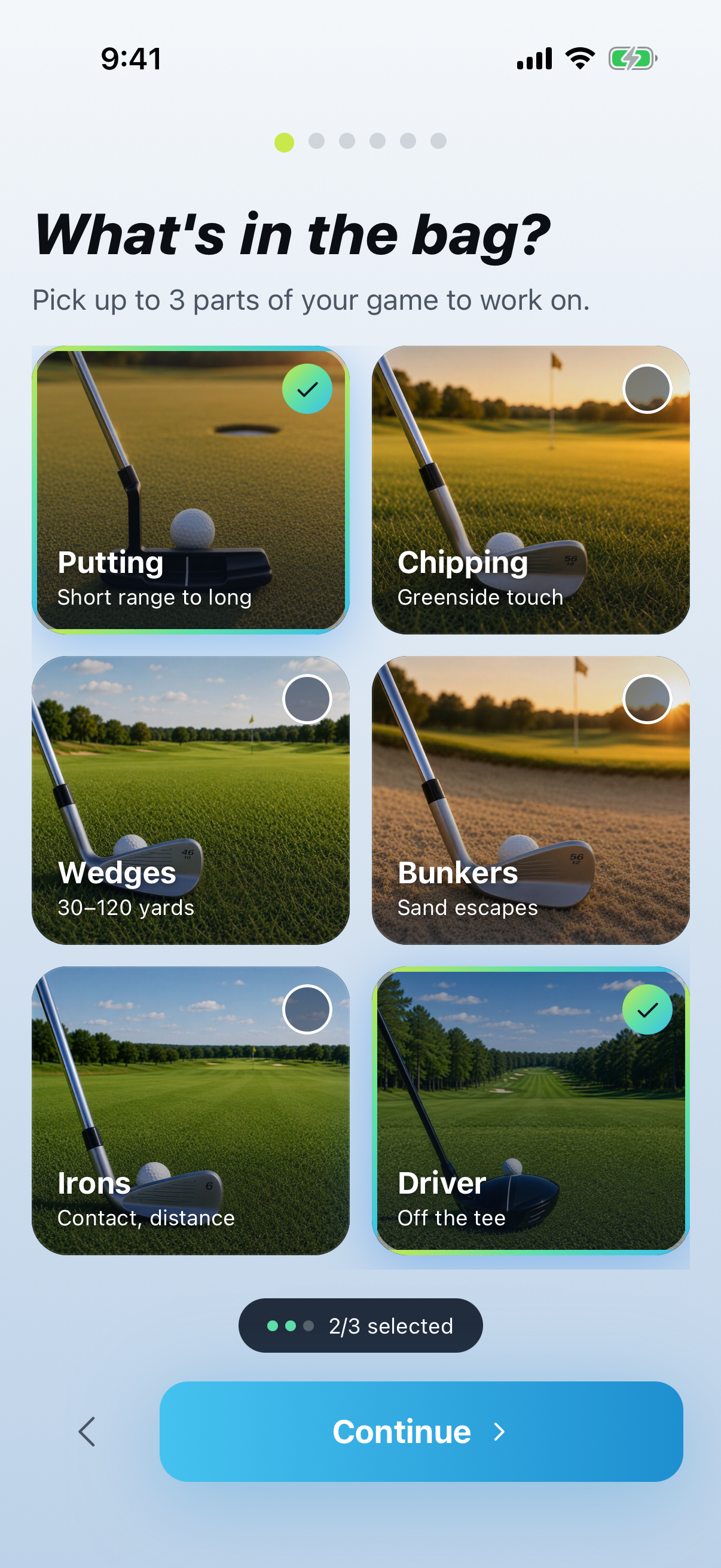
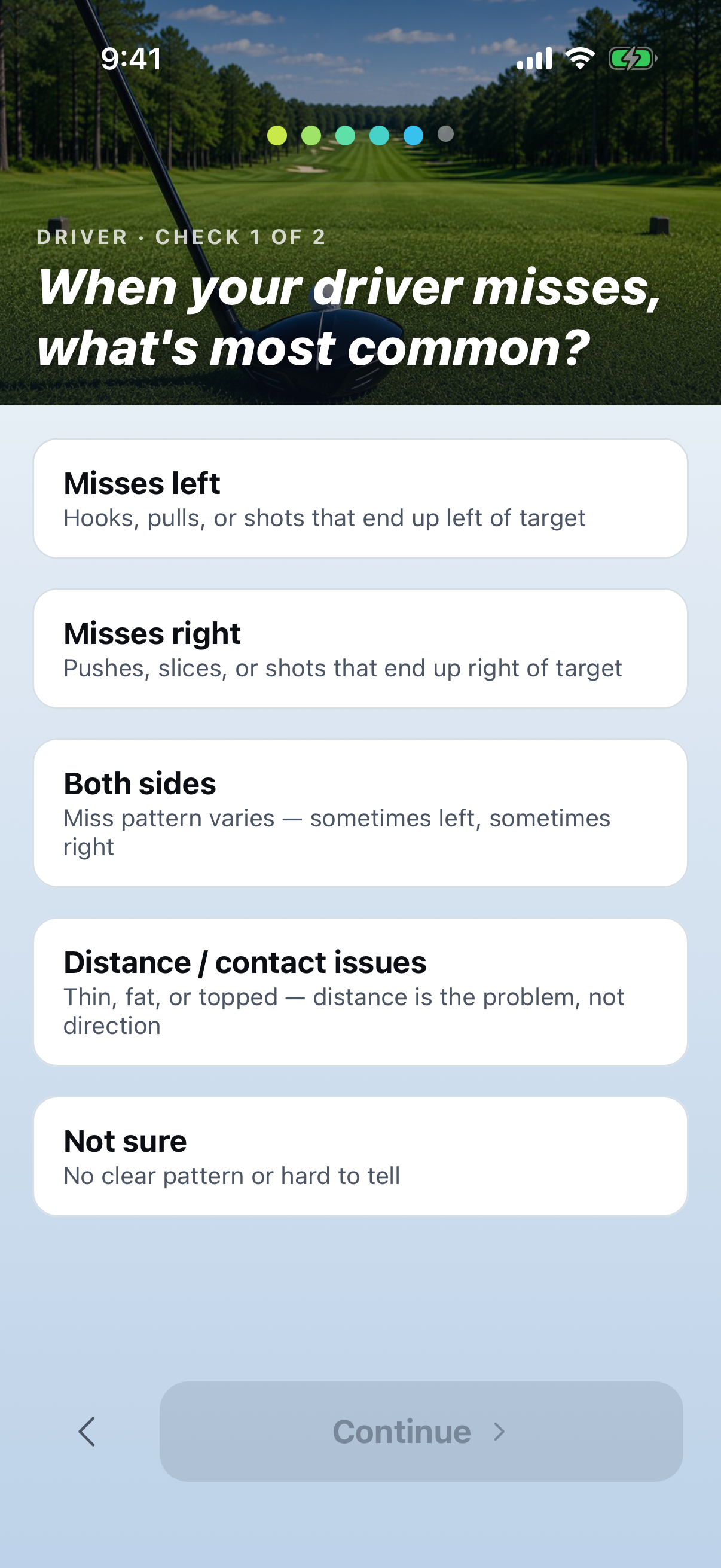
Diagnose your game

Ninety seconds of honest setup: what’s in your bag, how often you can practice, your handicap, and where the misses actually go. ASCND builds your starting plan from your answers — not from a template.

Where does it go wrong?

Right of target Left of target Thin contact Fat contact Short game
2

Recommend

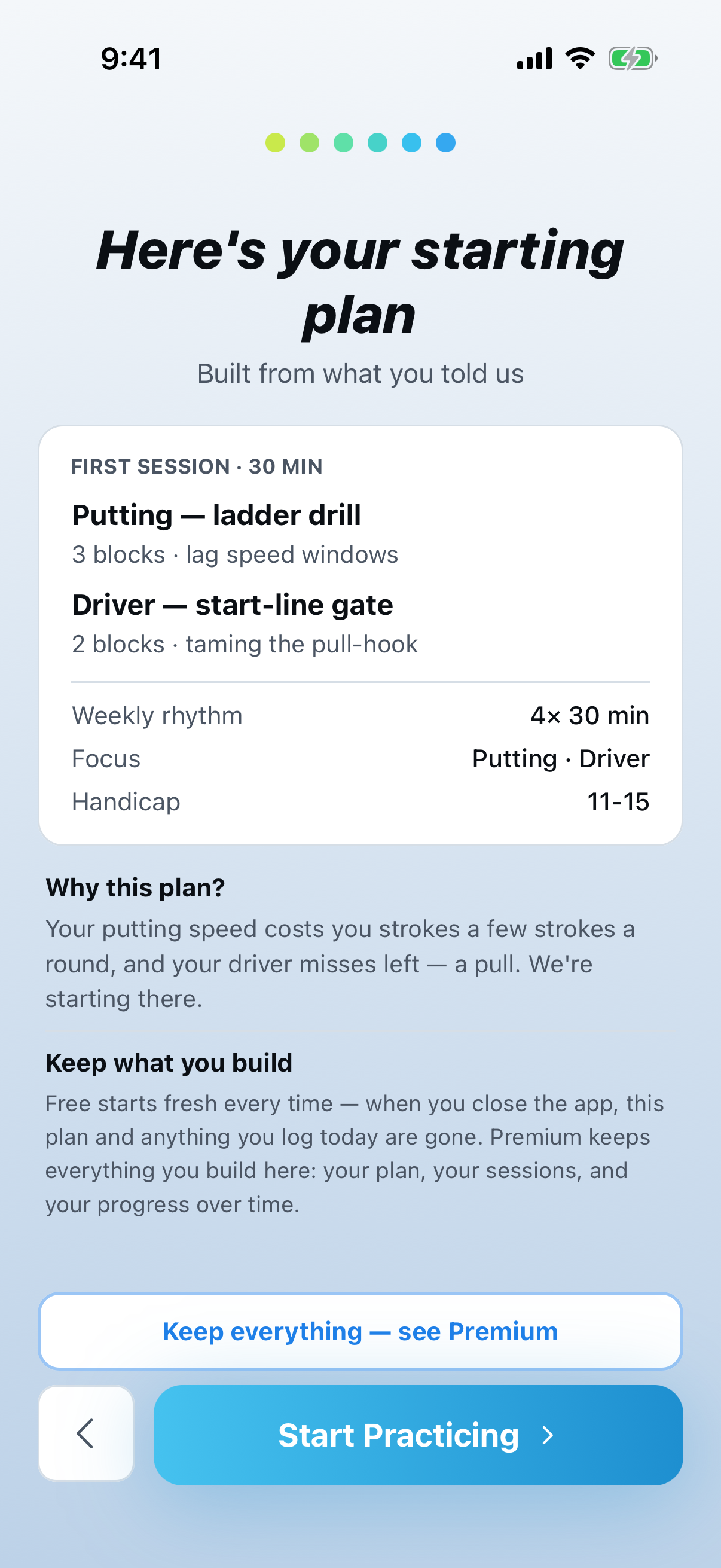
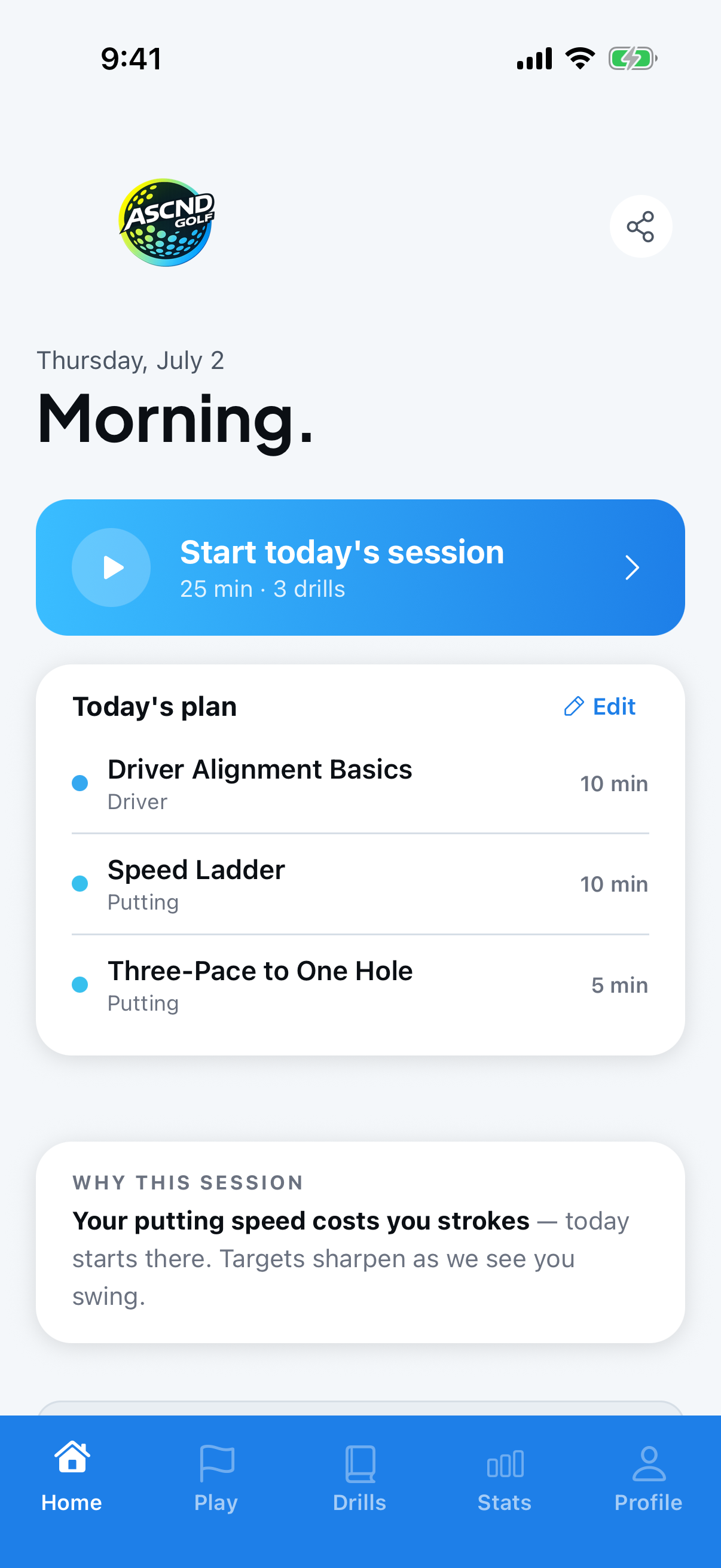
Get today’s practice recommendation

One session, sized to the minutes you actually have, with the reason attached. ASCND quotes your own diagnosis — you always know why this work, today.

Today · 25 min

Irons — start-line control

3 drills · range or mat

Built around your driver miss — today checks your start line. Targets sharpen as we see you swing.

3

Practice

Practice with intent

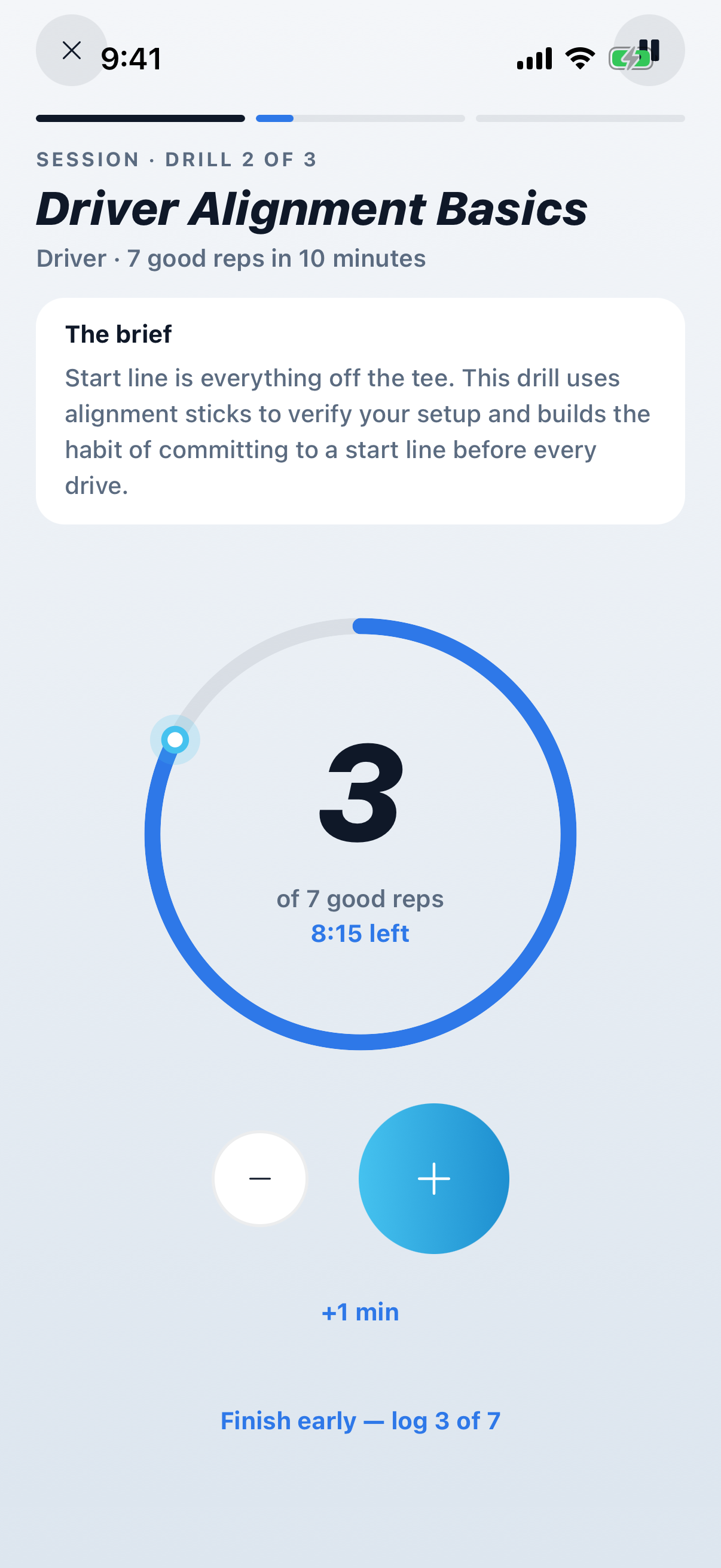
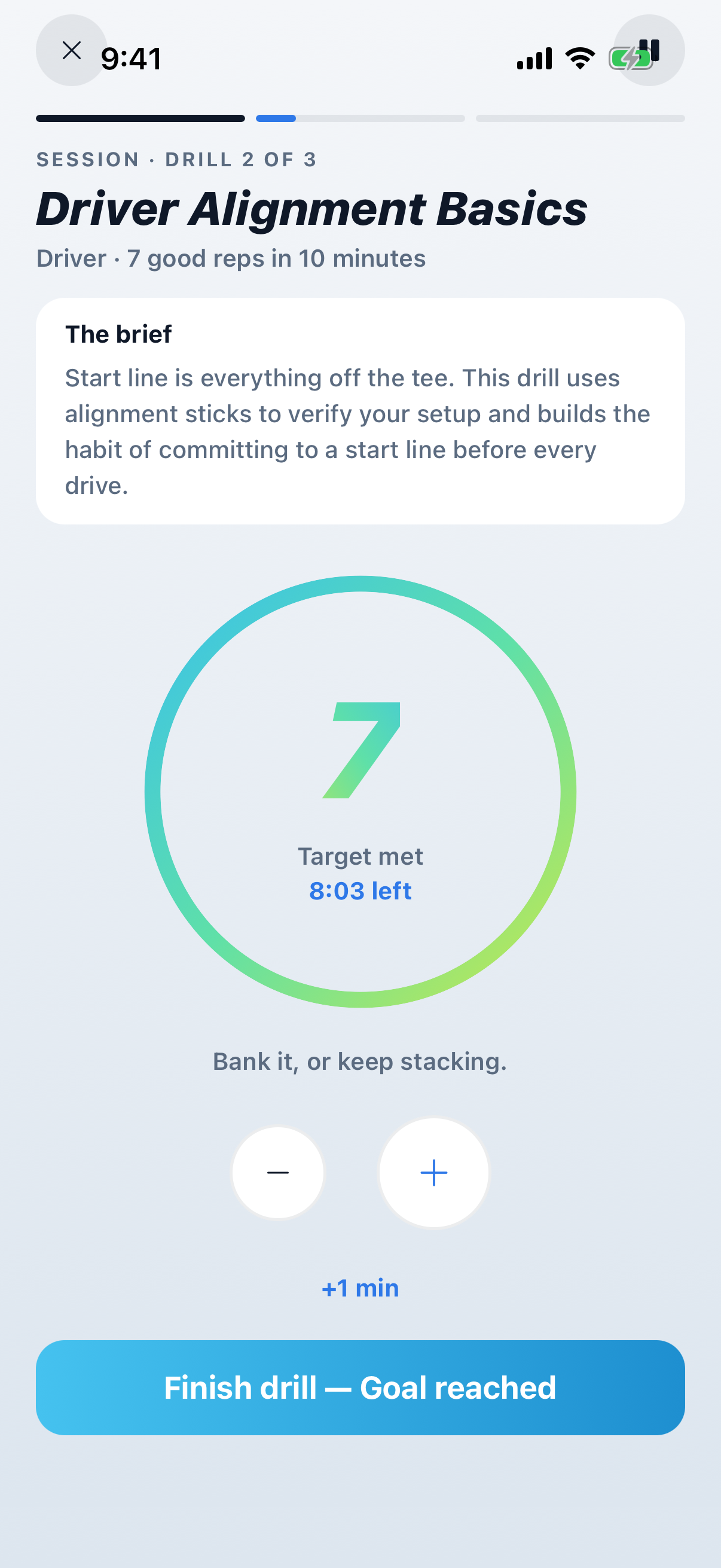
Not a bucket of balls. Every drill has a target, a rep structure, and a definition of done — so 25 minutes of ASCND practice beats an hour of scraping balls sideways.

Drill 2 of 3 · live

Driver start-line gate

Goal: 7 of 10 through the gate

5 of 7 so far
4

Log

Log results — and how it felt

Results are logged as you go. Between drills, one optional tap captures what got in the way. When it changes something, ASCND tells you exactly what — never a hollow “thanks for your feedback.”

Anything get in the way?

Contact control Carry-to-roll Start line

Carry-to-roll noted — Thursday’s ladder starts a club shorter.

5

Play

Connect it to your rounds

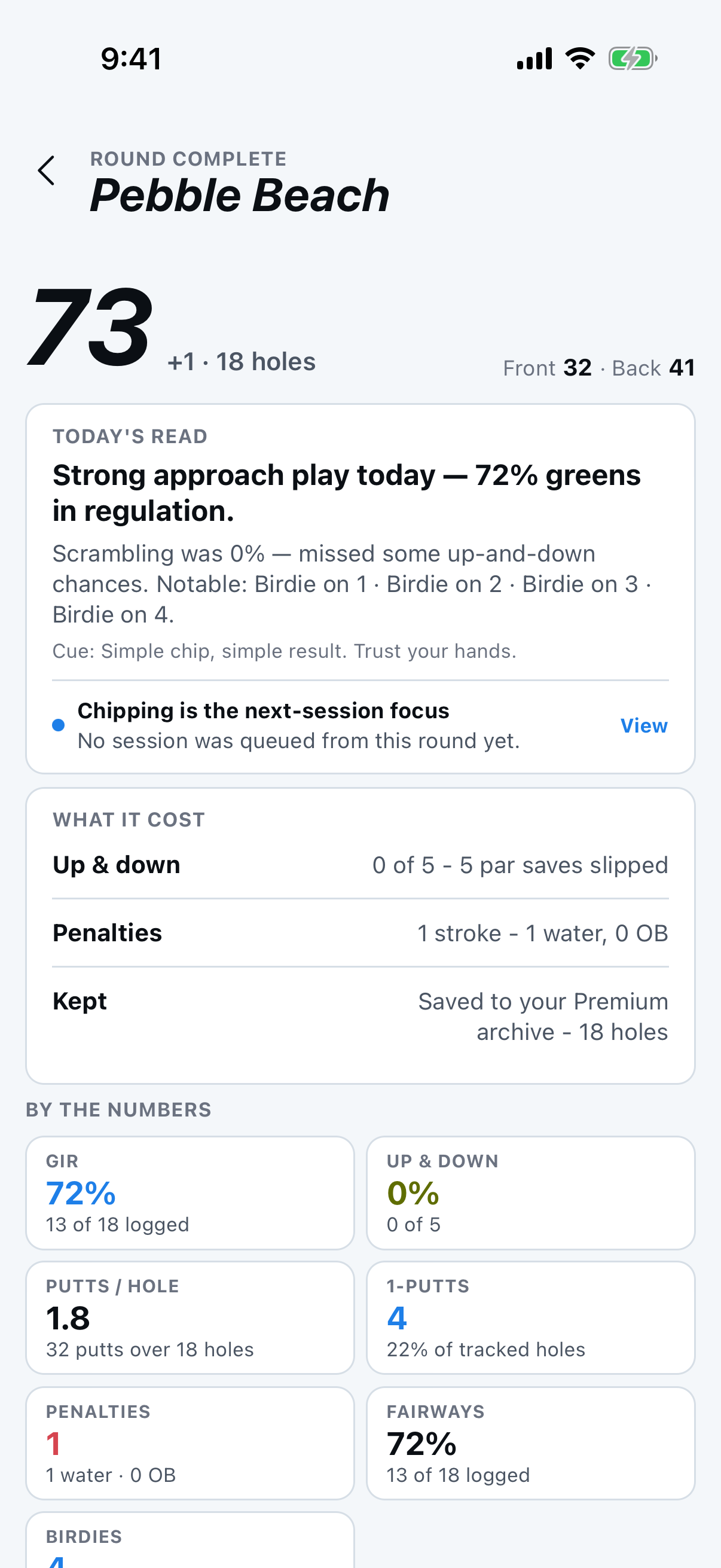
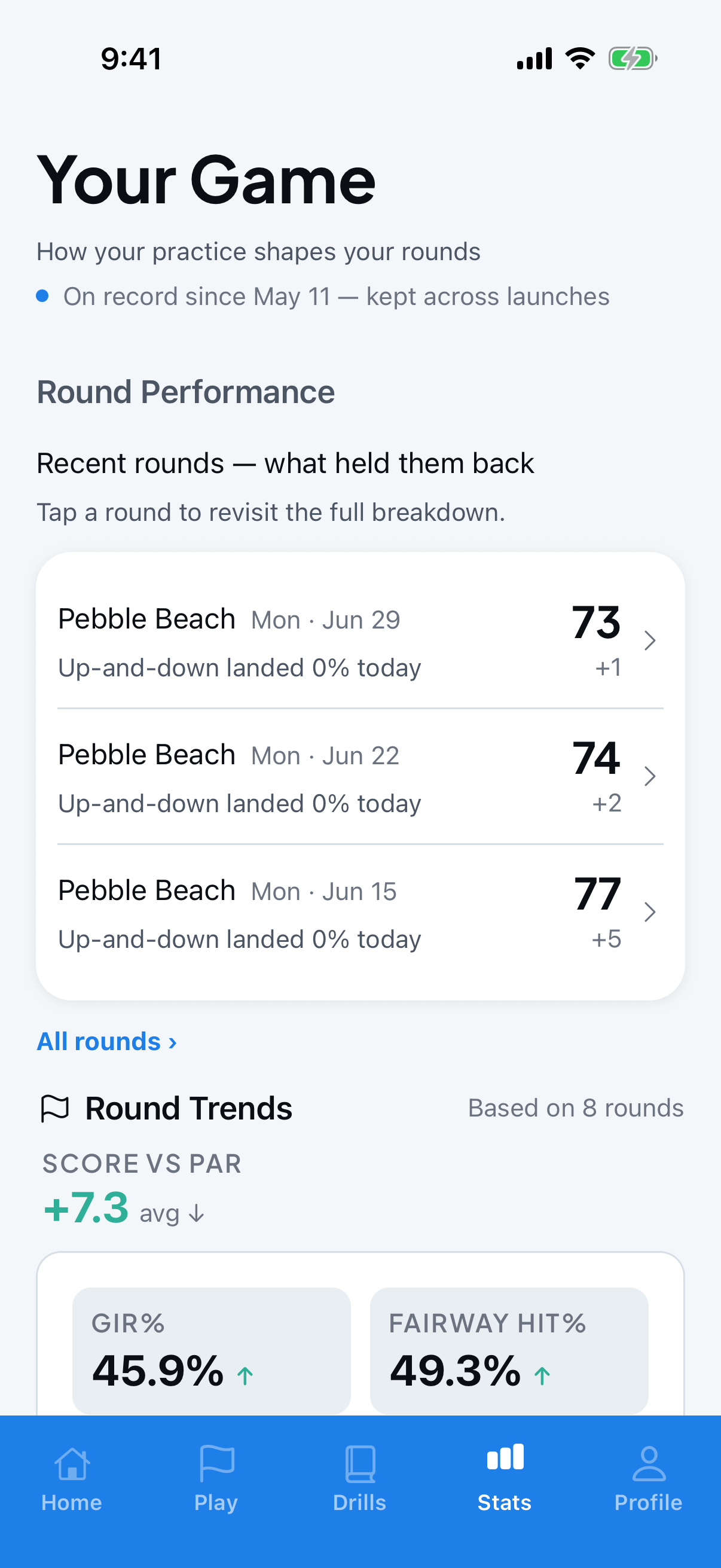
Rounds are where practice gets audited. ASCND reads what actually happened on the course against what you trained — so your range game and your course game stop being strangers.

Saturday · Presidio Golf Club

18 holes

3 misses right of target · 2 with mid-irons

84
+12
6

Trend

Watch trends form

Single sessions are noise. ASCND reads the line through them — and tells you plainly when the work is compounding, and when it isn’t yet.

Start line · 3 weeks

64% ▲ 6 pts

through the gate, trending up

7

Adjust

The next session adjusts

ASCND advances difficulty only when you’re ready, holds it when confidence dips, and recalibrates when the plan stops fitting your game. Then the loop starts again — sharper.

Next session

Holding difficulty this week

Confidence dipped after Saturday’s round. We bank the start-line gains before narrowing the gate.

The loop is simple. The judgment inside it isn’t.

How ASCND decides what to recommend — and when to hold, advance, or recalibrate — is the real differentiator.

Practice intelligence See the product